Cameras, secure entrances, door locks, and access control systems all have an important place in school security. But even the best equipment can’t make every decision, recognize every concerning interaction, or tell staff exactly what to do when something unexpected happens.
That’s why effective school security goes beyond the building itself.
A strong school safety plan brings together physical security measures with trained people, clear policies, communication, and preparation. Each layer supports the others, helping schools create an environment where students and staff can focus on what they’re there to do: learn, teach, and be part of their school community.
School Security Works Best in Layers
There isn’t one security measure that can address every situation a school may face.
- A secure entrance can help control who enters the building.
- Cameras can provide visibility into key areas.
- Visitor procedures establish expectations for guests.
- Trained personnel can identify concerning behavior and respond to situations as they develop.
- Emergency plans give staff a framework for what happens next.
Together, these measures create what’s often called a layered approach to school security.
The exact layers won’t look the same at every school. A small private school may have very different needs from a large public high school with multiple buildings and hundreds of daily visitors. A layered approach is designed to understand the environment and build a school security plan around how that particular campus actually operates.
And that starts with people.
People Provide the Judgment Technology Can’t
Security technology is valuable, but it still depends on people to use it effectively.
Trained security personnel can observe what’s happening in real time, recognize when something feels out of place, communicate with students and staff, assist visitors, and respond when a routine interaction begins to change. That human element can be especially important in a school environment.
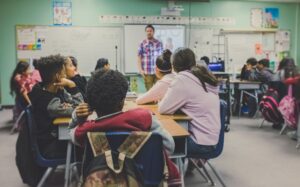
Schools aren’t office buildings with a predictable group of adults coming and going each day. They are active communities filled with students, teachers, administrators, parents, contractors, volunteers, spectators, and visitors. The environment changes throughout the day and throughout the school year.
Professional security personnel need to understand those rhythms and flows. They also need the judgment to distinguish between normal activity and something that deserves attention without making the school feel unnecessarily restrictive.
Clear Policies Turn Security Plans Into Everyday Practice
A school can invest heavily in security measures and still have gaps if the people using them don’t have clear procedures to follow. Consider something as routine as a visitor arriving at school.
Where should that person enter? How are they identified? Who determines where they’re allowed to go? What happens if they don’t follow the school’s visitor procedures? Who should a staff member contact if they’re concerned?
Those questions should have answers before an issue arises.
The same applies to other areas of school safety, including:
- Building access and visitor management
- Student arrival and dismissal
- After-hours building use
- Communication during an incident
- Responding to concerning behavior
- Large school events and activities
- Coordination with security personnel and first responders
Policies create consistency. Just as importantly, they help teachers and staff understand their role so they aren’t forced to make up a response in the moment.
Preparedness Helps Schools Respond When the Routine Changes
Most school days follow familiar patterns. Security planning becomes especially important when those patterns change.
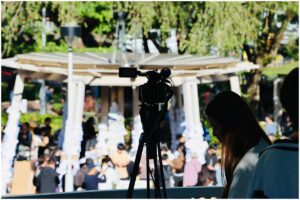
An open house may bring hundreds of parents into the building, or a Friday night football game can draw community members onto campus after normal hours. Concerts, dances, graduation ceremonies, and fundraisers can create different access points and crowd-management needs.
Then there are unexpected situations, from a disruptive visitor to a medical emergency or concerning behavior involving a student or member of the community. Preparedness means thinking through these scenarios ahead of time.
Preparation can’t eliminate every risk. It can, however, reduce uncertainty when a school needs to act quickly.
A School Safety Plan Should Grow With the School
School security isn’t something to put in place once and forget about.
Buildings change, staff members come and go, and new technology is introduced. And sometimes an incident, even a relatively minor one, reveals a gap that wasn’t obvious before.
Regularly reviewing the school safety plan gives administrators an opportunity to ask practical questions:
- Are our current procedures still working?
- Do staff understand them?
- Have changes to the campus created new vulnerabilities?
- Are there recurring situations that cause confusion?
- Are our security resources positioned where they’re most useful?
Those conversations can uncover improvements long before a serious incident puts the plan to the test.
Building a Safer School Takes More Than a Locked Door
Physical security matters. So do the people using it, the policies guiding it, and the preparation behind it.
When those pieces work together, schools are better equipped to make informed decisions about the safety of their communities.
At MProtective, we work with schools and organizations throughout Pennsylvania to develop security solutions based on their actual environments and needs. Our team provides trained security personnel, threat assessments, and security planning designed to support the people responsible for keeping their communities safe.
If you’re reviewing your school’s current security measures or wondering where there may be opportunities to strengthen your approach, contact us to start the conversation today.